


Sustainable Eating Guide — What I Eat in a Day to Reduce Waste & Eat Better
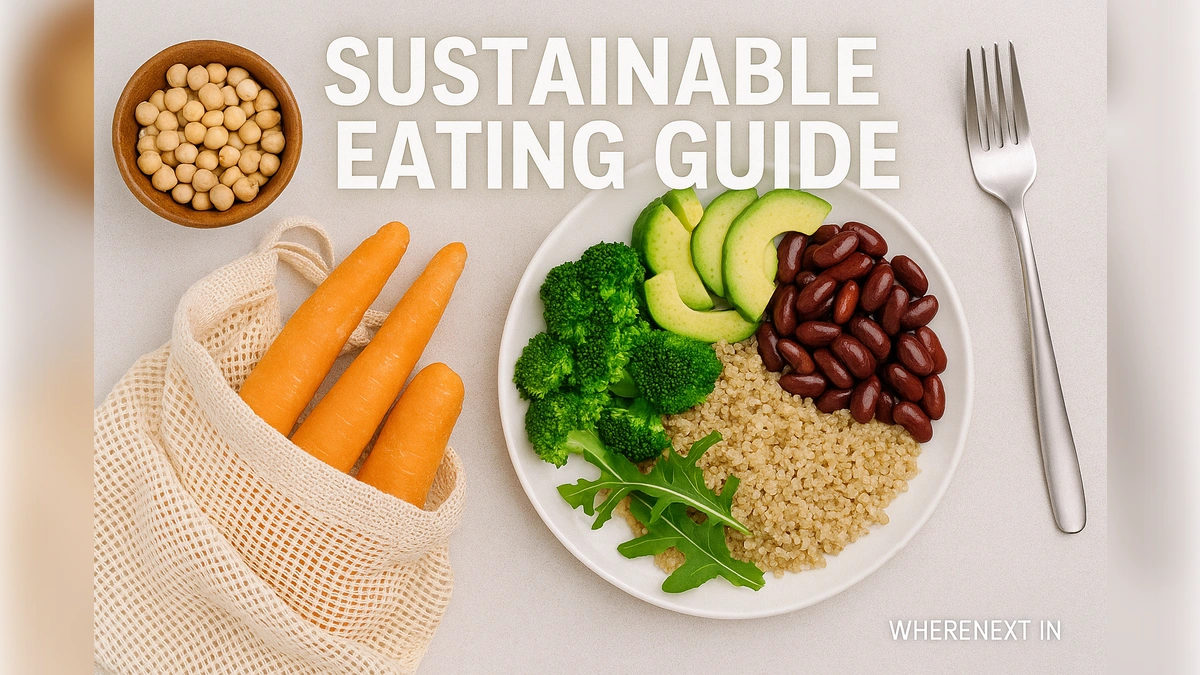
I love food. I love cooking, I love eating out, and yes, I love random snacks too. But at some point I realised how much food (and money) I was quietly wasting every month — half-used veggies, leftovers in the back of the fridge, and too many plastic packets.
So I slowly changed my eating habits. Not into some strict diet, but into a more “sustainable eating” style that feels natural for me. In this guide I’m sharing how I plan, shop, cook and store food so that:
- I waste less
- I spend less
- I still enjoy my meals
If you’re also trying to live more sustainably overall, this guide connects directly with my main lifestyle article:
👉 Ultimate Sustainable Living Guide
My simple “one-day” sustainable eating routine
To keep things real, here’s what a very normal sustainable eating day looks like for me (not daily, but most days):
Morning
- Breakfast: something quick like poha, upma, eggs or oats using ingredients I already have.
- Tea/coffee at home, not from single-use cups.
Afternoon
- Home-cooked lunch with simple dal, sabzi, roti/rice.
- Leftovers from the previous day are always used first.
Evening
- Snack: fruits, chivda, nuts instead of packaged chips.
Night
- Light dinner with whatever needs to be finished first in the fridge.
It’s not perfect, it’s not the same every day — but this style reduces waste and keeps my kitchen under control.
Step 1: I plan around what I already have
Earlier, I used to plan meals based on what I felt like eating. Now I first open my fridge and pantry and ask, “What do I need to finish first?”
This one small habit:
- Prevents food from going bad
- Saves money
- Makes me more creative in the kitchen
This also fits well with my zero-waste thinking:
👉 Zero-Waste Living for Beginners
Step 2: Smart grocery shopping (my personal rules)
I personally follow a few simple rules when I go shopping:
- Never go completely hungry – or I overbuy snacks.
- Take my own bags – saves plastic and keeps me mindful.
- Buy fewer items more frequently for fresh produce, instead of hoarding.
Whenever possible, I also choose:
- Loose fruits and vegetables instead of pre-packed ones
- Bigger packs for staples like rice and dal
More about my plastic reduction tricks is here:
👉 How I Reduced Plastic in My Daily Life
Step 3: Storage habits that changed everything
Honestly, storage made the biggest difference in my kitchen. If I store food properly, I waste less and cook more creatively.
Some habits that really helped me:
- Using glass jars for pulses, grains and snacks
- Keeping leftovers in clear containers so I can see them easily
- Putting “use first” items in the front of the fridge
If you want to see the kind of containers and products I love using, I’ve listed them here:
👉 Eco-Friendly Home Products I Personally Use
Step 4: Leftovers = next day’s shortcut
Before, leftovers felt like “old food” to me. Now I see them as time-saving ingredients.
Examples:
- Extra sabzi turns into a roll or sandwich filling
- Leftover rice becomes fried rice or lemon rice
- Dal can be turned into a soup with some spices
Step 5: What I do with peels, scraps and spoiled bits
No matter how careful I am, some waste is unavoidable — like fruit peels, veggie ends or food that occasionally spoils.
Instead of just throwing everything, I started experimenting with composting. It’s still not perfect, but it feels great when my waste turns into something useful for plants.
You can read about how I started with composting in small spaces here:
👉 Composting for Beginners
How sustainable eating fits into my overall lifestyle
Changing the way I eat naturally improved other areas of my life:
- I buy fewer random things – fits my sustainable living goals.
- I generate less trash – supports my zero-waste journey.
- I use more reusable containers – which I talked about in eco-friendly home products.
And most importantly, I feel more relaxed in my kitchen. Less clutter, less guilt, more good food.
Final thoughts
Sustainable eating is not a special diet. It’s just a calmer, more thoughtful way of handling food — from the market to the plate to the dustbin.
You don’t have to be perfect. You don’t have to cook fancy meals every day. You just need to respect the food you bring home and try not to waste it.
If you start with even one small habit from this guide, your kitchen — and your dustbin — will slowly look very different.
About the Author