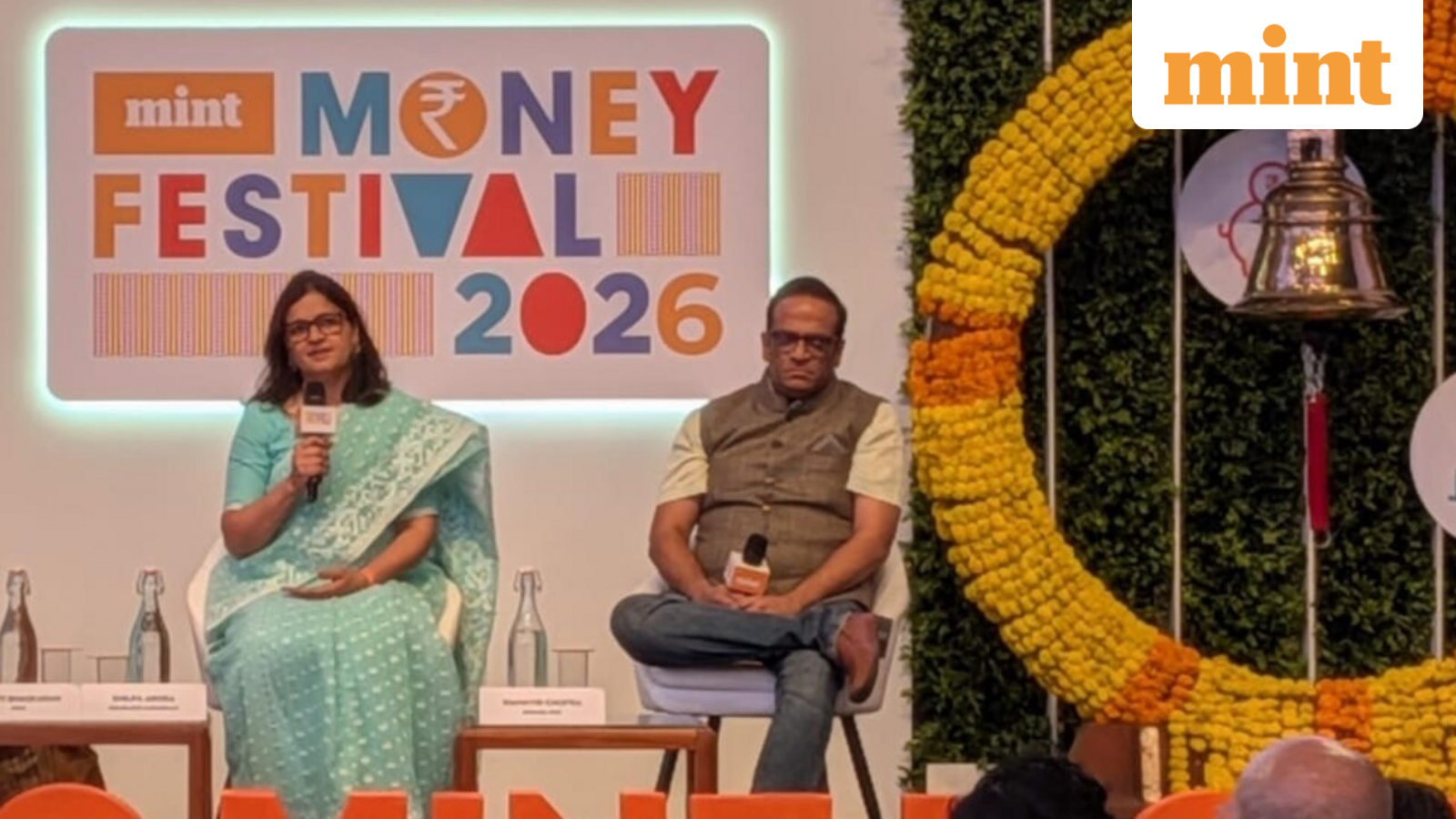
But one session shifted the focus from making money to protecting it.
Because one medical emergency can wipe out years of disciplined investing. And yet, despite the obvious risk, health insurance remains under-penetrated across Indian households.
At the Mint Money Festival, Mahavir Chopra, founder of Beshak.org, and Shilpa Arora, co-founder and chief operating officer of Insurance Samadhaan, confronted an uncomfortable question: what’s really broken in India’s health insurance system? For a product that sees the highest consumer complaints within the insurance industry, can families realistically skip insurance and rely on a large emergency fund instead?
Here’s what they said.
Expectation mismatch
The root cause of health insurance complaints is simple: expectation mismatch.
As per Chopra this happens because the person who is setting the expectation (the sales agent) and the person delivering the expectation (who handles claims) are different people within the same company. “
“The person who is selling you health insurance will give you a lot of promises about the product because his incentive is aligned with being able to sell the policy and not with ensuring outcomes for the customers. At the time of claim there is another person dealing with the customer whose job is to protect profits of the insurer,” he explained.
The sales team and the claims team operate with different incentives — and rarely in coordination. Even product design follows a similar pattern.
“For example, a product with unlimited sum insured is a nice hook. But the person designing the product is not talking to the person who is supposed to pay the claim. So when the claim comes the profit mindset takes over,” said Chopra.
“The person handling the claim would be like why did the customer take a super deluxe room and the customer would be like, but the person who sold me the plan told me I could choose anything I wanted.”
According to him, this disconnect has made products increasingly complex instead of simpler.
Fine print traps
Arora pointed to another major issue: poor understanding of what customers are actually buying.
Room rent caps, sub-limits on specific treatments, caps on modern therapies, deductibles and co-payment clauses — especially in senior citizen policies — can drastically affect the final payout. The customer information sheet (CIS), meant to simplify policy terms into a one-page summary, hasn’t helped much, she said.
“While the intent is to make policies easier to understand, the language can still be dense and difficult for someone without an insurance background to interpret confidently,” said Arora. For her the problem is that products are not designed in simple terms and are rarely explained in simple terms at the point of sale.
But the issues don’t end there but extend all the way to claims as well. “Third-party administrators (TPAs) at the hospital insurance help desk are acting like postmen and not really helping the customers,” Arora added.
TPAs, who serve as a bridge between insurers and hospitals, have become highly procedural, she said. Even minor documentation errors can trigger rejections. Instead of resolving issues, they often end up merely passing files back and forth.
Emergency fund vs insurance
Given these structural flaws, is it viable to skip health insurance altogether and rely on savings?
Both experts were clear: no.
“A Rs10 lakh cover is not equal to Rs10 lakh savings. It’s equal to Rs10 lakh cover multiplied by your lifetime because even if you use it fully in one year it replenishes the next year,” explained Chopra.
However, he acknowledged that building wealth to handle smaller, recurring hospital bills can reduce dependence on insurance for minor expenses.
“One can then buy a super top-up plan to pay for major instances of hospitalization,” he said.
But for senior citizens, relying purely on an emergency corpus is risky due to the higher probability of repeated hospitalization.
Arora added that in metro cities, where treatment at corporate hospitals can be expensive, a minimum base cover of ₹10 lakh is necessary.
“You can increase the base cover as per your payment capacity. Additionally you need a super top-up cover of ₹25 lakh to ₹50 lakh minimum,” she suggested.
With chronic conditions such as cancer on the rise, financial protection against prolonged illness is critical, she said.
Choosing wisely
When asked how to pick the right plan, Arora outlined three key checks:
– Room rent caps
– Coverage for modern treatments and therapies
– Insurer’s hospital network
Each directly affects claim outcomes.
Chopra suggested going beyond headline metrics like claims settlement ratio. Instead, consumers should examine speed of claim settlement, percentage of claims settled within 30 days, claims-to-complaints ratio, and rejection ratio — all available in insurers’ public disclosures.
His takeaway was pragmatic: in health insurance, it may be easier to eliminate weak insurers than to confidently identify the “best” one.