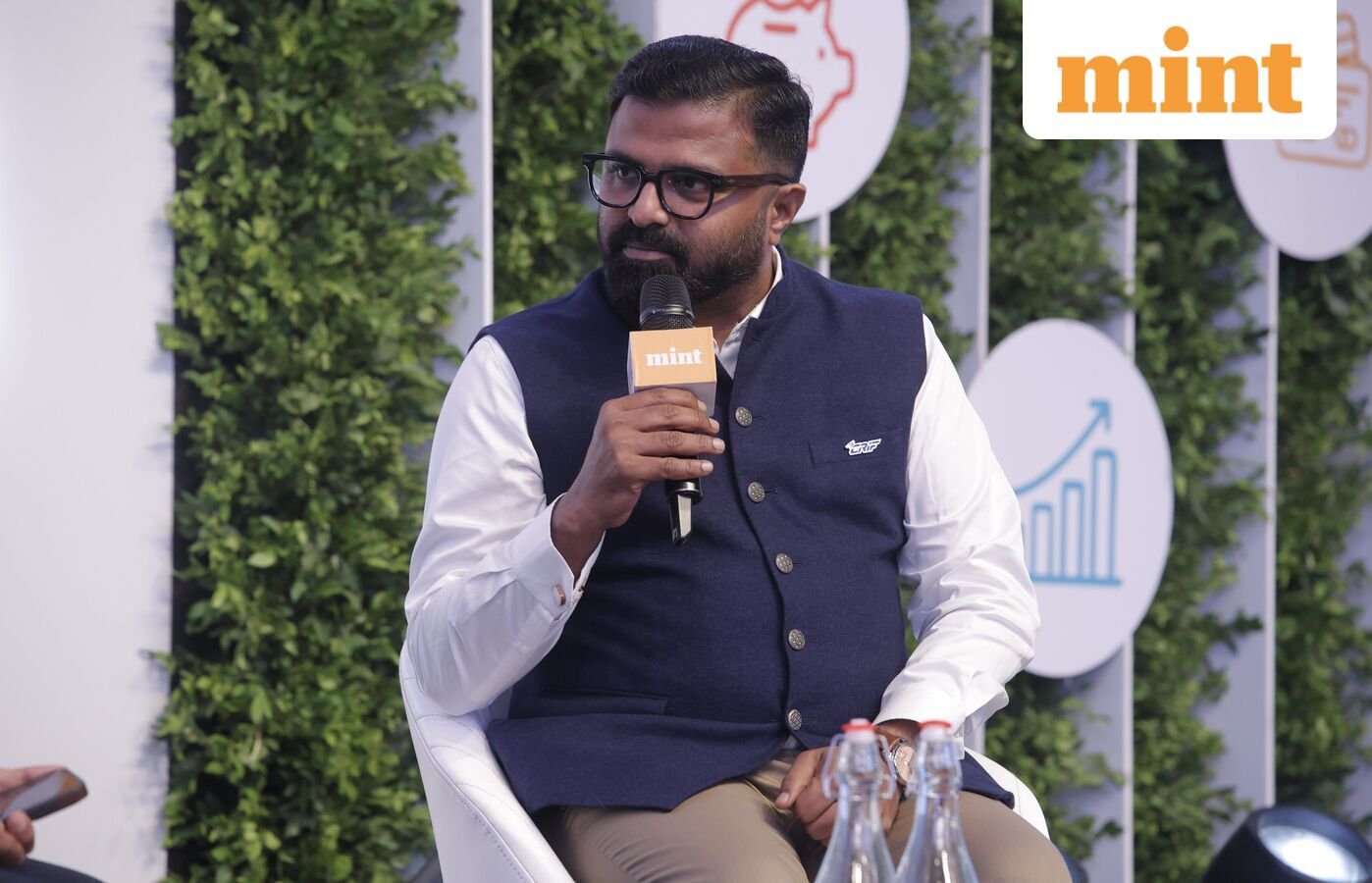
Credit score has evolved into a vital part of an Indian’s digital “DNA”. That was the central message from Ramkumar Rajashekaran, whole-time director of CRIF Highmark, at the Mint Money Festival 2026.
Speaking at the event held on 14 February at the NSE Atrium in Mumbai, Rajashekaran highlighted a larger cultural shift—one that has made an individual’s credit score more important than ever before.
Nation of borrowers
Rajashekaran opened with a striking statistic: nearly 45 crore Indians are now “credit active” in the formal system.
Credit, once largely an urban phenomenon, has penetrated Tier-5 markets, semi-urban hubs and rural pockets.
“Awareness has become much better,” he noted. “Today, you see youngsters proud to share a credit score over 750. It’s become a part of the DNA, a social status that gives you credibility and the ability to be independent.”
What was once a back-office banking metric is now social currency.
Beyond loans
Most consumers still associate credit scores only with bank loans. But Rajashekaran explained that their utility has expanded significantly.
Within finance, credit scores influence market entry strategies—banks assess the credit health of a geography before opening branches. Scores also power pre-approved top-up offers and even loan recovery segmentation.
The spillover into non-financial sectors has been equally significant.
In insurance, companies use scores to assess the “persistency” of customers—whether they are likely to pay premiums on time. In employment, credit screening is increasingly standard for roles involving fiduciary risk.
Fittingly for a Valentine’s Day event, the most talked-about shift was in matrimony.
Rajashekaran advocated checking a prospective partner’s credit report. “It’s a very good practice to understand the credit report of a prospective groom or bride before getting into a long-term commitment,” he said.
He clarified that it must be done with consent, but called it an essential modern due diligence tool. “In an era where old-school family background checks are disappearing, a credit score is a fair way to see how a person manages their responsibilities.”
Algorithm logic
Addressing why scores vary across India’s four bureaus, Rajashekaran said that while modeling criteria may differ slightly, the fundamentals remain consistent.
Repayment behaviour is key. “The recency, frequency, and severity of delinquency all matter,” he explained. A default from two years ago hurts less than one from last month.
He also cautioned against “credit hunger”—a rapid velocity of loan inquiries—and warned about being a ‘revolver’ on credit cards (paying only the minimum due) versus a ‘transactor’ (paying in full).
Score hygiene
For those looking to improve their standing, Rajashekaran shared “basic hygiene” practices.
Timely repayment remains critical. “When you default, the drop is almost in real-time, but restoring the score takes several months,” he explained.
He advised keeping credit card usage between 50% and 60% of limits, as breaching limits signals risk to algorithms.
High-priced BNPL and small-ticket loans may be convenient, but frequent borrowing can indicate reckless behaviour. “If you have the wherewithal to pay all your loans, keep at least one running, or you won’t have a score at all to build on,” said Rajashekaran.
A credit score today is no longer just a gateway to a home loan. It is a marker of financial discipline, a tool influencing insurance pricing and employment screening—and increasingly, a reflection of personal credibility.
In a nation of 45 crore credit-active Indians, your score isn’t just a number. It’s your financial identity.